Follow-up
Speed to lead: what the first few minutes are actually worth
Responding fast to a new enquiry matters more than almost anything else you can change. Here is the evidence, including its limits.
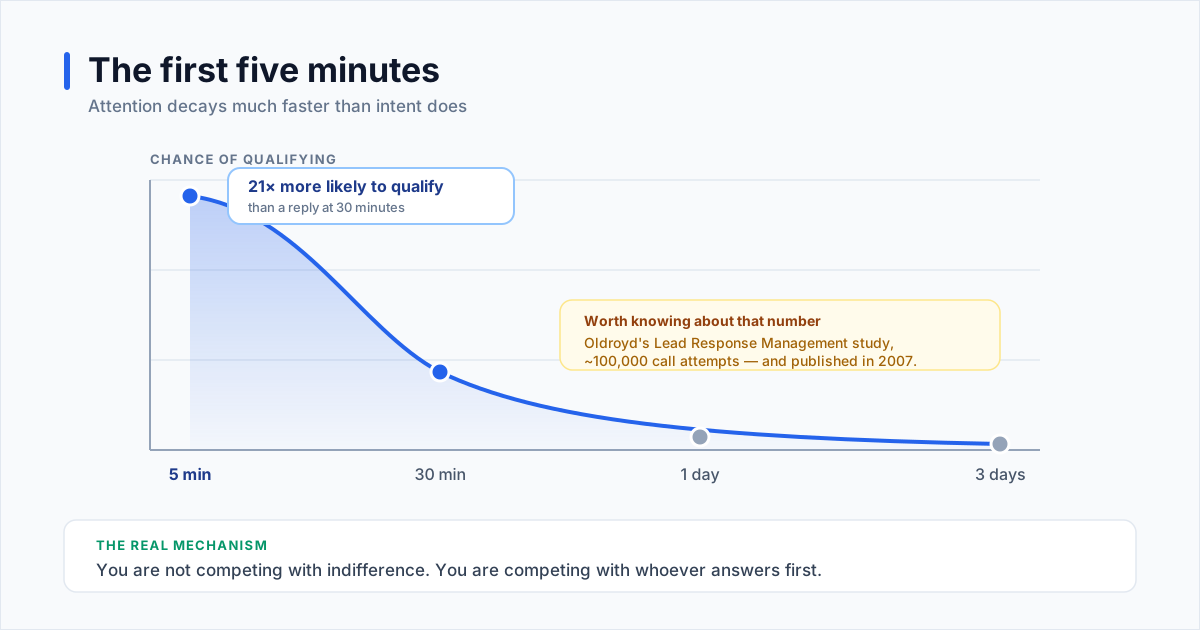
You will have seen the statistic: contact a lead within five minutes instead of thirty and you are twenty-one times more likely to qualify it. It gets quoted constantly, usually without a source.
Where that number comes from, honestly
It comes from the Lead Response Management study run by Dr James Oldroyd, based on roughly 100,000 call attempts. It is a real study with real data behind it. It is also from 2007. Every article recycling it in 2026 is quoting research older than the smartphone.
We think it is directionally right and worth acting on. We do not think you should present it as new evidence, and we would rather say so than repeat it as though it were measured last week.
Why it holds up anyway
The mechanism is not really about psychology. It is about attention. Someone who has just submitted a form is, at that moment, sitting at their desk thinking about the problem you solve. An hour later they are in a meeting. A day later they have filled in two competitors’ forms as well.
You are not competing with indifference. You are competing with whoever answers first.
The part nobody mentions
If you run ads, slow response is also how you end up blaming the wrong thing. The agency delivers a lead at 11am. The rep calls at 6pm the next day. The lead has gone cold. The conclusion drawn is "these leads are poor quality", and the campaign gets changed when the follow-up was the problem.
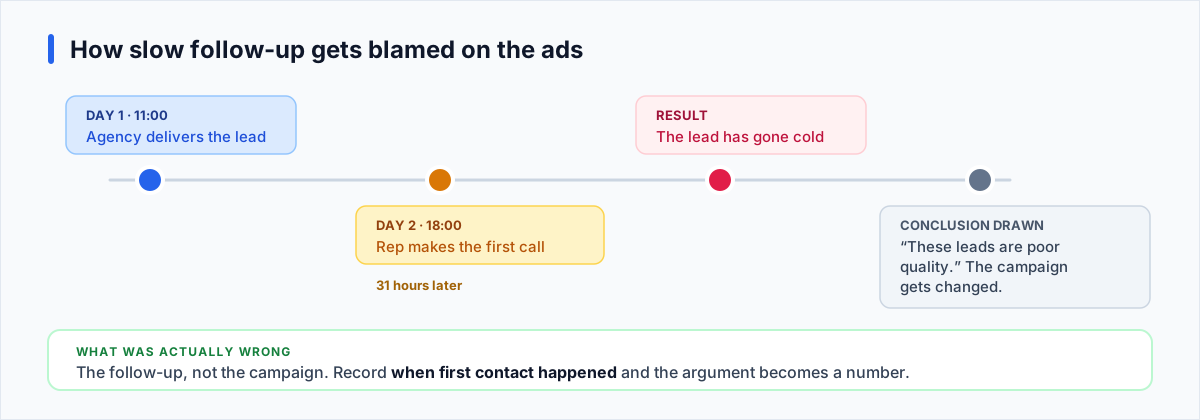
This is why response time is worth recording, not just improving. If you can show that leads contacted within an hour convert at four times the rate of ones contacted the next day, you have turned an argument into a number.
What to change
- Make new enquiries interrupt someone. An email into a shared inbox is not an alert.
- Assign on arrival. A lead owned by everybody is owned by nobody.
- Record when first contact actually happened, not just that it did.
- Escalate silence. If nothing has happened in an hour, somebody else should be told.
None of that requires a bigger CRM. It requires the enquiry to reach a named person quickly, and for the clock to be visible.
Try Desk CRM
Pipelines, follow-up reminders, and a record of everything your team did — built for small sales teams.